

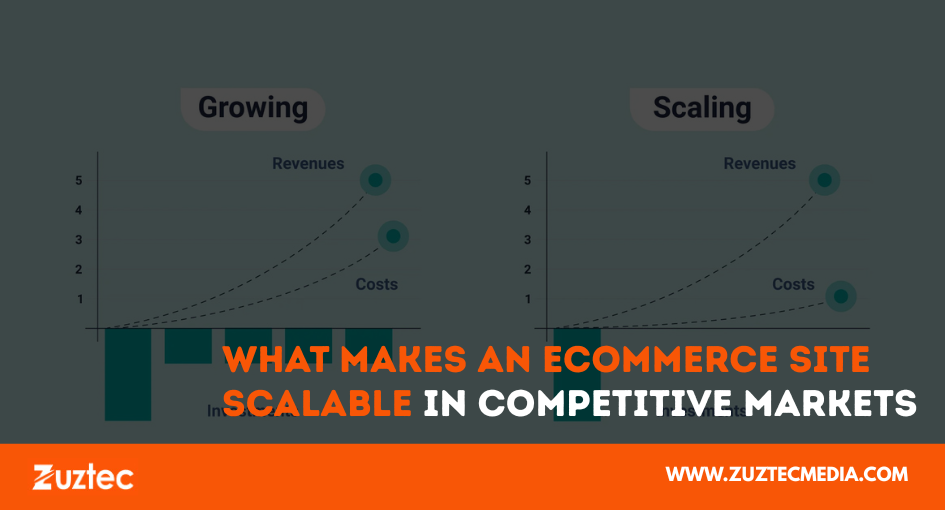
What Makes an Ecommerce Site Scalable in Competitive Markets
The ecommerce industry has become one of the most competitive sectors in the digital economy. Businesses of every size are competing for customer attention, faster delivery, stronger online visibility, and better shopping experiences. What makes an ecommerce site scalable: In such a demanding environment, simply launching an online store is no longer enough. Companies must build ecommerce websites that can grow efficiently without sacrificing speed, security, or customer satisfaction. This is where scalability becomes essential.
A scalable ecommerce site is designed to handle increasing traffic, larger product catalogs, rising transaction volumes, and changing customer demands without performance issues. Whether a business experiences gradual growth or sudden spikes during seasonal sales, the website must continue functioning smoothly. Slow loading pages, checkout failures, and poor user experiences can quickly drive customers to competitors.
Scalability is not only about handling technical growth. It also involves business flexibility, efficient operations, marketing adaptability, and the ability to expand into new markets. Modern ecommerce businesses rely on scalable systems to manage inventory, improve customer engagement, support multiple payment options, and deliver personalized experiences.
As competition grows, businesses must focus on building online stores that are prepared for long-term expansion. This includes investing in strong infrastructure, optimized website performance, secure payment systems, and advanced automation tools. Companies that fail to scale effectively often struggle with customer retention and operational inefficiencies.
This article explores the key factors that make an e-commerce site scalable in competitive markets. It explains the technologies, strategies, and business practices that support sustainable growth while maintaining excellent customer experiences.
What Makes an Ecommerce Site Scalable: Strong Website Infrastructure
A scalable ecommerce website starts with a strong technical foundation. Infrastructure refers to the servers, databases, hosting systems, and software frameworks that support the website.
Cloud-based hosting solutions are widely used because they allow businesses to increase resources during high-traffic periods. This flexibility ensures that the website remains stable even during major sales events or sudden traffic surges.
Databases must also be optimized to manage growing amounts of customer information, inventory data, and transaction records. A poorly structured database can slow down website performance and create operational bottlenecks.
Businesses that invest in reliable infrastructure are better prepared for long term growth and market competition.
Fast Loading Speed and Performance
Website speed plays a major role in scalability. Customers expect ecommerce websites to load quickly on both desktop and mobile devices. Even a small delay can increase bounce rates and reduce conversions.
Optimized images, caching systems, and content delivery networks help improve loading speed. Businesses also need efficient coding structures that reduce unnecessary scripts and improve responsiveness.
As traffic increases, maintaining consistent performance becomes more challenging. Scalable ecommerce platforms are designed to handle higher visitor numbers without slowing down.
According to Jeff Bezos
“If you do build a great experience, customers tell each other about that.”
This quote highlights the importance of user experience in achieving ecommerce success.
Mobile-Friendly Shopping Experience
Mobile commerce continues to grow rapidly across global markets. What makes an ecommerce site scalable: A scalable ecommerce website must provide a seamless mobile experience that works across different screen sizes and devices.
Responsive design ensures that layouts adjust automatically for smartphones and tablets. Mobile-optimized checkout systems also reduce cart abandonment and improve customer satisfaction.
Businesses that fail to prioritize mobile usability may lose a significant share of potential customers, especially in highly competitive markets where users expect convenience and speed.
Flexible Product Management
Managing a growing inventory is one of the biggest challenges in ecommerce expansion. Scalable websites must support thousands of products without affecting performance.
Efficient categorization, filtering systems, and inventory management tools make it easier for customers to find products quickly. Businesses also benefit from automated stock tracking and real-time updates.
Many companies use product generator tools to create bulk listings and organize large catalogs efficiently. These systems save time and improve operational consistency, especially for stores with rapidly expanding inventories.
In addition, businesses often study product ecommerce examples from successful brands to understand how large-scale product management systems operate effectively.
High-Quality User Experience
Customer experience is one of the most important factors in scalability. A website that is difficult to navigate or visually outdated can struggle to compete in crowded markets.
Clear navigation, intuitive layouts, and smooth checkout processes improve usability and encourage repeat purchases. Businesses should also invest in professional product design presentations to make items more appealing to shoppers.
Detailed product description content is equally important. Customers rely on accurate descriptions, specifications, and visuals before making purchasing decisions. Strong product pages improve trust and reduce return rates.
Scalable ecommerce businesses continuously improve the user journey to maintain customer satisfaction as they grow.
Secure Payment and Checkout Systems
Security is essential for any ecommerce platform. Customers must feel confident that their payment information is protected.
Scalable websites use encrypted payment systems, fraud prevention tools, and secure authentication methods to safeguard transactions. These measures not only protect customer data but also help businesses maintain credibility.
As transaction volumes increase, payment systems must continue operating efficiently without delays or failures. Reliable checkout processes are critical for maintaining sales performance during periods of high demand.
Marketing Adaptability and Digital Visibility
Scalable ecommerce businesses need strong digital marketing strategies to compete effectively. Search engine optimization, email campaigns, and social media advertising help attract new customers and increase brand awareness.
Selling through external channels such as product Facebook Marketplace listings can also expand reach and generate additional sales opportunities. Multichannel selling strategies allow businesses to connect with customers across different platforms while maintaining centralized inventory management.
Analytics tools help businesses track customer behavior and marketing performance. This data supports better decision-making and helps companies adjust strategies based on market trends.
Automation and Operational Efficiency
Automation is a major component of ecommerce scalability. As businesses grow, manual processes become inefficient and time-consuming.
Automated inventory management, customer support chatbots, and order processing systems help businesses manage larger workloads with fewer operational delays. Automation also reduces human error and improves consistency across different departments.
Scalable businesses often integrate multiple systems, including payment processing, shipping, and customer relationship management tools. These integrations streamline operations and support long-term growth.
FAQs
What is the 80 20 rule in ecommerce?
The 80 20 rule in ecommerce refers to the idea that around 80 percent of sales often come from 20 percent of customers or products. Businesses use this principle to focus on their most profitable customers, top-selling products, and effective marketing strategies. Understanding this rule helps companies allocate resources more efficiently and improve overall profitability.
What are the 5 C’s of e-commerce?
The 5 C’s of ecommerce commonly include customer, content, community, convenience, and commerce. These elements work together to create successful online shopping experiences. Businesses that focus on strong customer engagement, useful content, and smooth purchasing processes are more likely to build long-term success in competitive markets.
What is scalability in e-commerce?
Scalability in ecommerce refers to the ability of an online business to grow without losing performance, efficiency, or customer satisfaction. A scalable ecommerce website can handle increasing traffic, larger inventories, and more transactions while continuing to operate smoothly. Scalability supports long-term business expansion and market competitiveness.
What are the 4 pillars of scaling up?
The four pillars of scaling up are people, strategy, execution, and cash flow. Businesses need skilled teams, clear growth strategies, efficient operations, and strong financial management to scale successfully. These pillars help companies manage expansion while maintaining stability and profitability.
What are the three types of scalability?
The three main types of scalability are vertical scalability, horizontal scalability, and diagonal scalability. Vertical scalability involves increasing the power of existing systems, while horizontal scalability adds more servers or resources. Diagonal scalability combines both approaches to support flexible and efficient growth.
Ability to Handle Traffic Spikes
Competitive ecommerce markets often experience sudden increases in traffic during promotional campaigns or holiday seasons. A scalable website must remain functional during these peak periods.
Load-balancing systems distribute traffic across multiple servers to prevent crashes. Cloud infrastructure also allows businesses to increase resources when needed temporarily.
Without proper scalability measures, websites can become slow or unavailable during important sales periods, resulting in lost revenue and customer frustration.
Data-Driven Decision-Making
Modern ecommerce growth depends heavily on data analysis. Scalable businesses collect and analyze customer information to improve marketing, pricing, and inventory strategies.
Analytics tools provide insights into customer behavior, conversion rates, and sales performance. Businesses can identify trends, predict demand, and personalize shopping experiences based on this data.
Data-driven decisions help ecommerce companies remain competitive and adapt quickly to changing market conditions.
Customer Support and Retention
As ecommerce businesses grow, customer support becomes increasingly important. What makes an ecommerce site scalable: Scalable systems must support efficient communication across email, live chat, and social platforms.
Fast response times and effective issue resolution improve customer trust and loyalty. It is frequently less expensive to keep current clients than to find new ones.
Loyalty programs, personalized recommendations, and targeted promotions can also strengthen long-term customer relationships.
International Expansion Opportunities
Scalable ecommerce websites are often designed to support global growth. This includes multiple currency options, multilingual support, and international shipping integrations.
Businesses entering global markets must also consider local payment methods, tax regulations, and regional customer preferences. Flexible ecommerce systems make it easier to adapt to these requirements.
International scalability allows businesses to reach larger audiences and reduce dependence on a single market.
Challenges Businesses May Face
Scaling an ecommerce website is not without difficulties. Growing businesses may face rising operational costs, increased cybersecurity risks, and technical limitations.
Managing large product catalogs, maintaining fast performance, and ensuring consistent customer experiences can become more complex as traffic grows. Businesses also need skilled professionals to manage infrastructure, marketing, and customer service operations.
Competition adds additional pressure, as customers can quickly switch to alternative brands if expectations are not met. Continuous improvement and strategic planning are necessary to maintain growth in competitive markets.
Future Trends in Ecommerce Scalability
Emerging technologies are shaping the future of ecommerce scalability. Artificial intelligence is being used to personalize shopping experiences and automate customer interactions.
Voice commerce, augmented reality product previews, and predictive analytics are also becoming more common. Businesses that adopt innovative technologies early may gain a competitive advantage in crowded markets.
Scalable ecommerce systems must remain flexible enough to integrate future technologies without major disruptions.
To sum up, what makes an ecommerce site scalable: scalability is one of the most important factors behind long-term ecommerce success in competitive markets. A scalable website can handle growing traffic, expanding product catalogs, and increasing customer demands without affecting performance or user experience. By investing in strong infrastructure, security, automation, and customer-focused strategies, businesses can build ecommerce platforms that support sustainable growth and remain competitive in the evolving digital marketplace.